2026 astrology Astronomy February January Moon nasa Physics Planets science space Stargazing stars
February might be the shortest month of the year but there is still lots to see up in the night sky. The dark nights remain with us for a little while longer and alongside them the presence of the winter constellations is strong. In addition, there is a host of planets and the usual lunar cycle just waiting to be observed!
Moon and Planets:
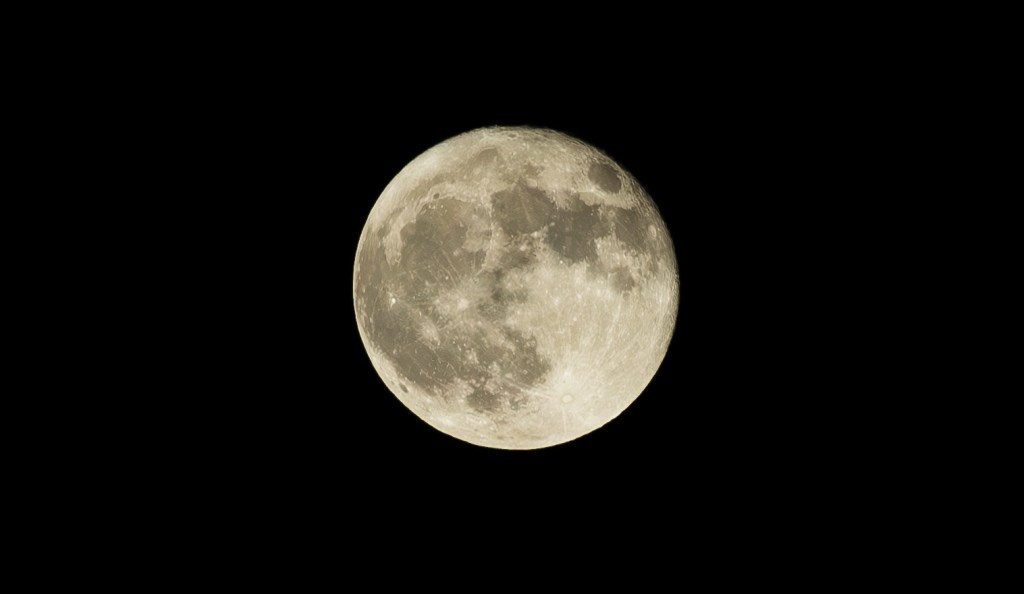
Figure 001: An image depicting the Full Moon. 📸: Ryan Cutts
The month starts off strong as we are treated to a full Moon, rising in the East on, the night of the 1st of February. By the 9th of February the Moon will have reached its last quarter with a New Moon occurring on the 17th. The final event of the lunar cycle happens on the night of the 24th, when the Moon enters its first quarter.
Throughout the month there are some opportunities to see the Moon alongside some notable stellar objects. The full Moon on the first lies within the constellation of Cancer, with Jupiter visible in Gemini somewhat higher in the sky. As the Moon begins to wane, it passes through the constellation of Leo and can be seen next to it’s brightest star on the third of the month. On the 19th of February the Moon is in conjunction with Saturn. A barely visible sliver of the Moon can be observed low on the horizon just after dusk. By the 24th the first quarter Moon can be seen alongside the open cluster of Pleiades, next to the constellation of Taurus.
A number of planets are also visible throughout the month. Jupiter remains in Gemini, as it did last month, and remains above the horizon for most of the night. Early in the month Jupiter rises in the afternoon and sets after sunrise the following morning. However, as the month progresses, Jupiter sets earlier in the night. Saturn can be found in the constellation of Pisces and is also visible after dusk. Saturn only remains above the horizon for a few hours each night, hence observation just after sunset is highly recommended. Mercury, Venus, and Mars are also visible, although observation is significantly more challenging. All three planets start the month in the constellation of Capricornus and move towards Aquarius in the later stages of the month. This group of planets is visible just after sunset for just a brief period. The planets will appear low on the horizon however, observation is made difficult by the glow of the Sun.
Stars and Constellations:
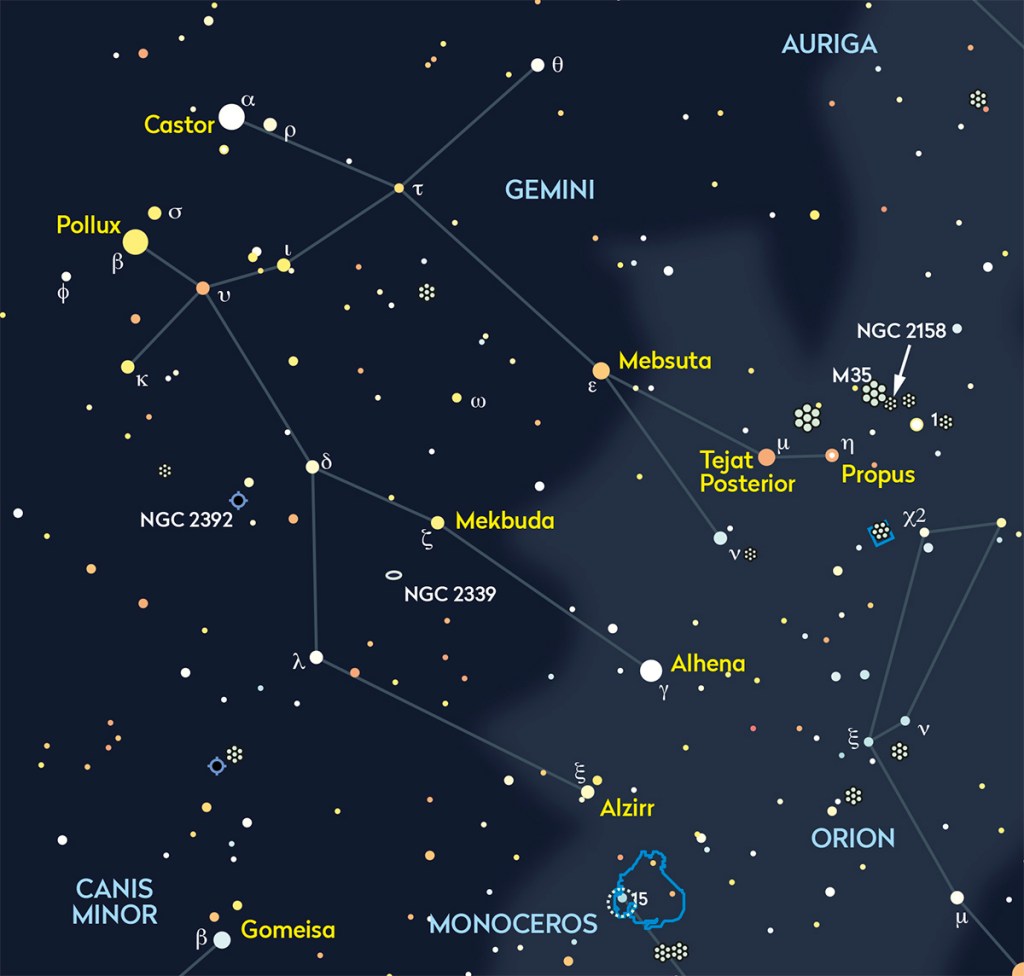
Figure 002: An diagram to represent the position of the stars which form the constellation of Gemini. 📸: BBC Sky at Night
Orion remains the most prominent of the constellations in the Southern night sky and will endure throughout the winter months. Gemini can be found in the skies above Orion, to the East. Follow the line constructed by Riegl and Betelgeuse (Orion’s left foot and right shoulder respectively) and look for the bright stars, Castor and Pollux. Also to the East, following the line of Orion’s belt, is Canis Major and its brightest star Sirius, which sits low on the horizon. To the West, following the same line of Orion’s belt, is the constellation of Tarus, the bull. Marked by the star of Aldebaran, or the eye of Tarus, which sits in the tip of the V-shaped constellation giving off an orange-reddish hue. Continuing along the same path brings us to Pleiades or the Seven sisters. An open cluster of young (astronomically speaking), blue stars. Most people can spot at least six stars with the naked eye, however a pair of binoculars or a telescope will reveal many more.
Switching to the North, the head of Draco has now become clear above the horizon and is much more recognizable, lying below the constellation of Ursa Minor. Later in the evening, toward the Northeast, the distinctive P-shaped constellation of Boötes now rises above the horizon. Found by following the ‘tail’ of Ursa Major which leads to the brightest star in Boötes, Arcturus. As the saying goes, “Arc to Arcturus and speed onto Spica”, continuing to follow the curved path of Ursa Majors ‘tail’ brings us to the star Spica found in Virgo. To the East of Draco, is the constellation of Cygnus, or the Northern Cross. So called for its distinctive cross shape. Rising through the constellation of Cygnus is the Milky Way. Following the tail of the Swan, the Milky Way stretches into Cassiopeia and through the constellation of Perseus. Finally, it reaches the Southern sky in Gemini and arrives at the horizon in the constellation of Monoceros.
Galaxy Season:
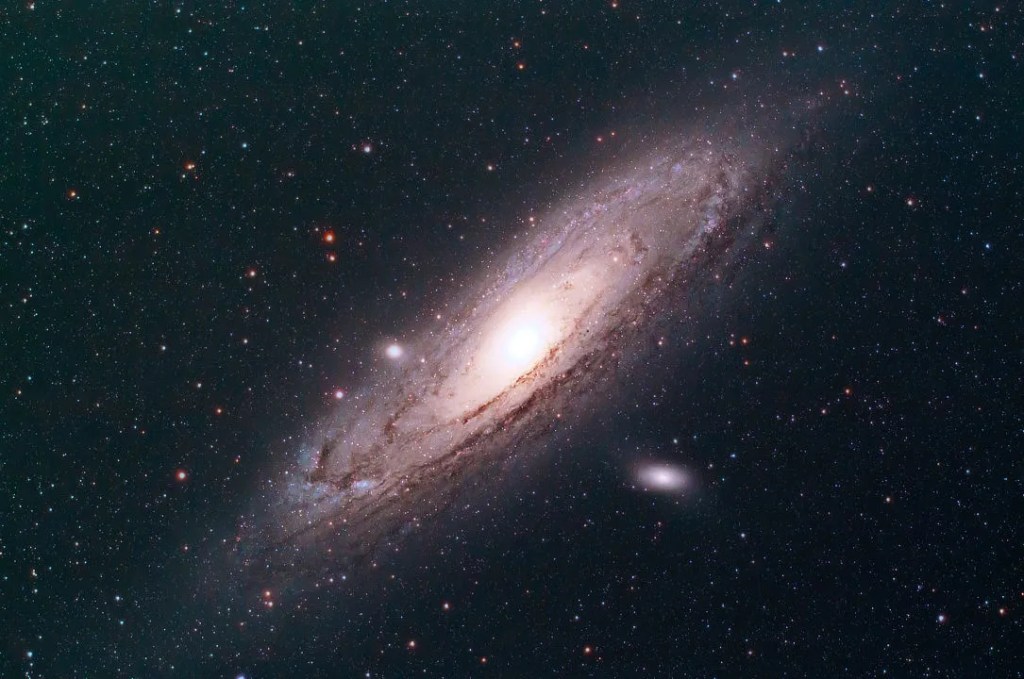
Figure 003: A photograph of the Andromeda galaxy. 📸: Sky at Night Magazine
February marks the start of the so-called galaxy season in the Northern hemisphere. During the winter months, the Earth is positioned away from the from the Milky Way, clearing the path of observation for deep sky galaxies. Andromeda is the most easily visible and can actually been seen by eye! Dark skies really help when it comes to spotting galaxies, observing in light polluted skies is particularly challenging.
To find the Andromeda galaxy, first locate the Great Square of Pegasus, which is lying relatively close to the horizon throughout February. Follow the trail of stars from the top left corner of the square until you reach a branch of three stars orthogonal to the initial trail. Hanging off the end of the branch is Andromeda. It will look like a faint glowing smudge to the naked eye however, with a simple pair of the binoculars, the core of the galaxy and its outer halo can be revealed.
Another galaxy which can easily be viewed under the dark skies of February is the Triangulum galaxy, also known as M33. We can easily find this galaxy by ‘hopping’ from Andromeda. First take the faint branch of stars which led us to Andromeda, and this time follow the line in the other direction. Around the same distance as Andromeda, this time on the other side of Pegasus lies the Triangulum galaxy, sitting below a small triangle of stars in the sky.
Continuing on, Bode’s galaxy and the Cigar galaxy are a pair of targets that are easily identifiable. The first step in this instance is to find the Plough asterism in Ursa Major. By forming a line from the stars Dubhe (top right) and Phecda (bottom left) we can locate the galaxies. Follow the line from Phecda, towards Dubhe and continue on past Dubhe. At a distance approximately one third as long as the line which connects the stars, we can find the galaxies. Bode’s galaxy is identified by its round shape and somewhat brighter glow. The Cigar galaxy is thin and elongated, looking not too dissimilar to a Cigar.
Artemis II

Figure 004: A photograph of the NASA SLS rocket on the launch pad at Cape Canaveral. 📸: NASA
Whilst not visible here from the UK, I thought it pertinent to mention the highly anticipated launch of the Artemis II mission. For the first time in more than 50 years, NASA is set to send four astronauts on a journey around the Moon. Following the success of the unmanned Artemis I test flight, the next assessment for the Space Launch System (SLS) and Orion spacecraft is to complete a manned flight. The flight path includes several orbits of the Earth before embarking on the four day trek to the Moon. Once there, the Orion spacecraft will fly around the Moon, using it as a gravitational slingshot to guide the capsule back to Earth. The launch requires specific set of conditions so there are several opportunities currently penciled in, the first of which occurs on the 6th of Feb.
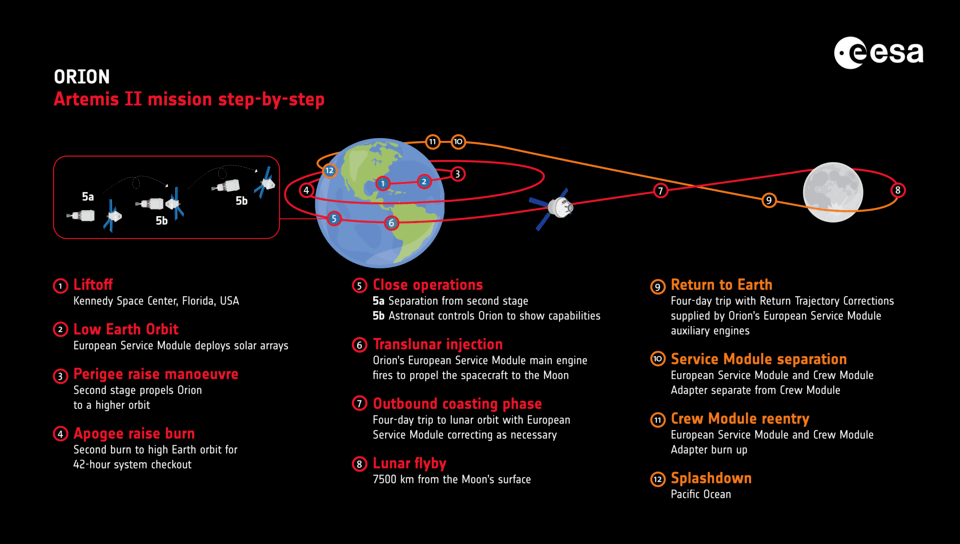
Figure 005: A diagram represeting the orbital path to be taken by the Orion spacecraft on it’s journey to the Moon. 📸: ESA
Final Word
The shortest month delivers some big opportunities to observe the skies. Whilst the nights slowly start to shorten, there is still ample opportunity to observe the wonder of the night sky. Make the most of this months night sky and enjoy the offerings from the heavens.
 Asterismos