

The Science Behind the Northern Lights
Introduction
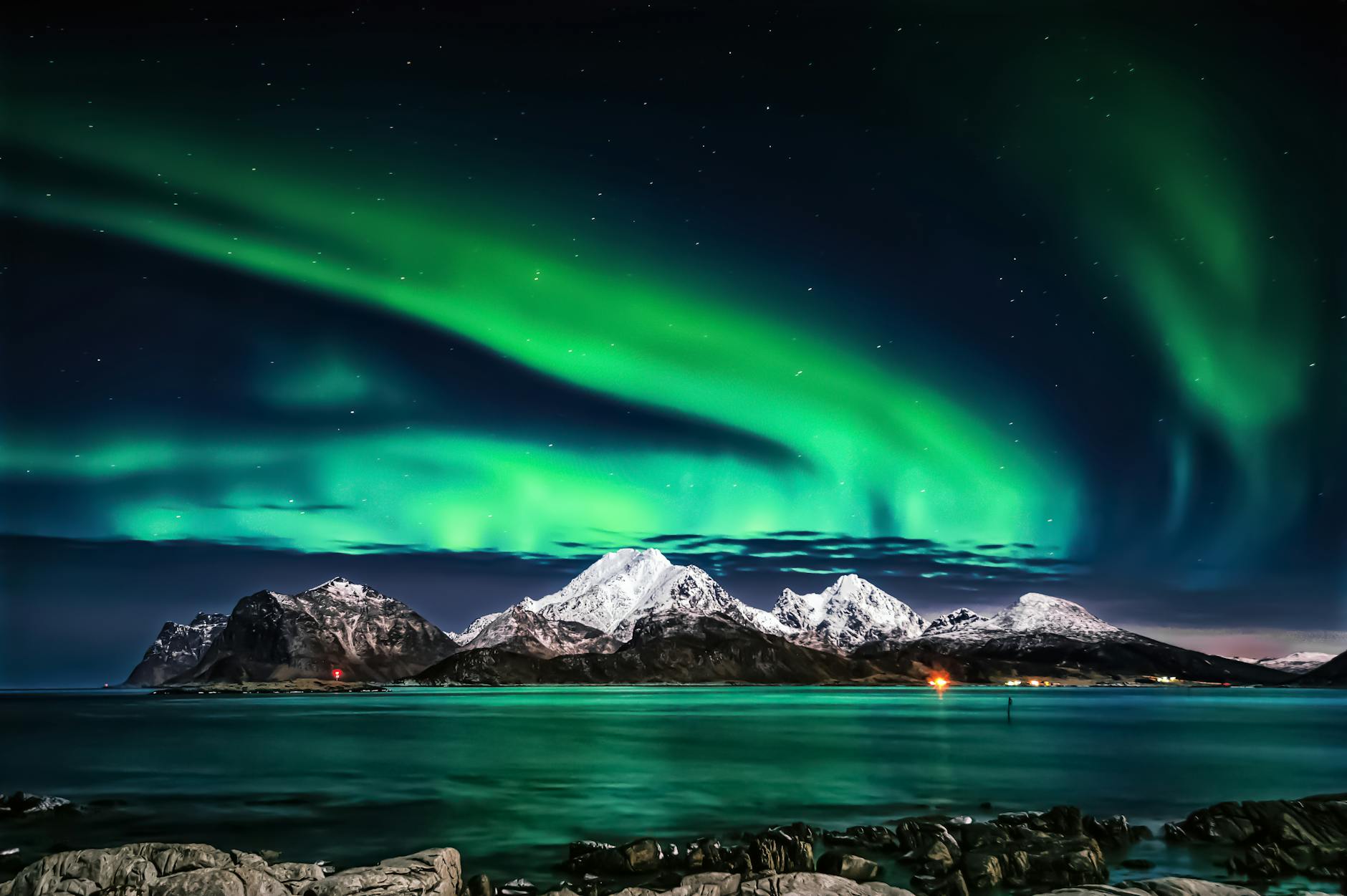
Of all of the wonders of the natural world, the Northern lights are perhaps the most striking. The hues of greens, purples and reds that light up the otherwise dimly lit night sky are adored by many around the world, with a great number of people travelling hundreds of miles just for the chance to catch a glimpse of the aurora.
“The northern lights rise like a delicate veil of green fire, dancing across the night sky, whispering secrets of the cosmos to those who dare to look up.”
— Unknown
This article aims to take a dive into the physics behind the phenomena, with the objective of describing what otherwise, seems to be a magic show, to the lay audience. Join us on this educational journey to learn everything about why these simply spectacular lights can be seen in our night sky.
It all Starts with the Sun
Looking up at the night sky, you would be forgiven for thinking that the universe is filled with only stars, planets and moons. In actuality, the “empty” space that we observe between these celestial objects is filled with streams of particles, radiation and the reflection of that radiation off of the planets and the moons.
Many of these particles begin their journey within stars, much like our Sun. Stars are comprised of many different layers, and the relative motion between said layers means that each star generates a massive magnetic field. However, the full picture is not this straightforward. Overall, these layers do move relative to each other, but in smaller sections we can see that the motion is somewhat random. This random motion gives rise to local magnetic fields within the overall magnetic field. These local magnetic fields manifest themselves as solar activities, an example of which would be sunspots.
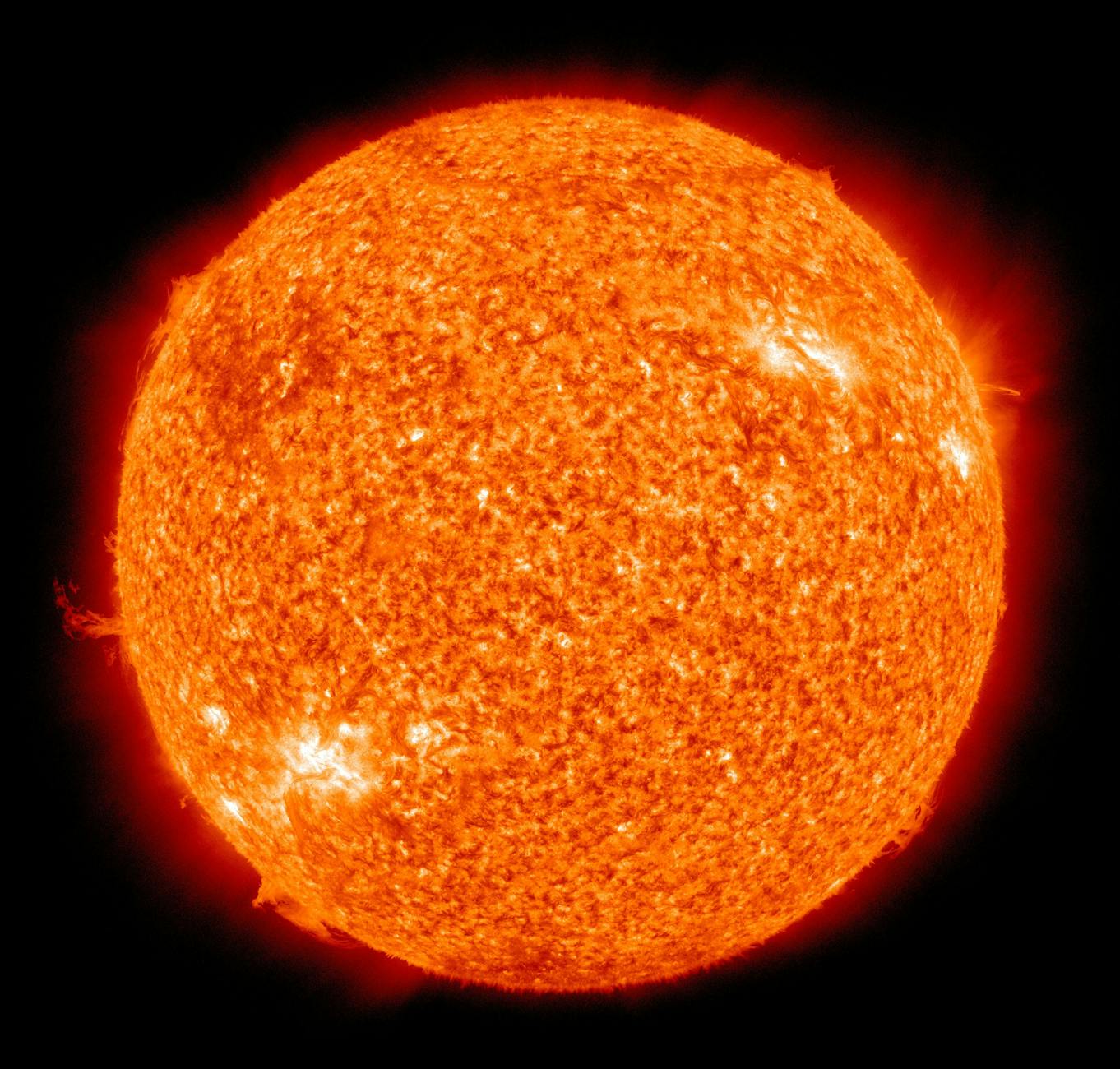
One consequence of the solar activities is the production of high velocity charged particles, Protons and electrons, small sub-atomic particles. These particles are given a velocity greater than the escape velocity of the Sun, such that, the particles are able to escape the Sun’s gravity. The Sun emits these particles in all directions and as a result some of them are directed towards the Earth. The amount of these particles that reach the Earth varies with the level of solar activity at the time.
It’s Almost Show Time
Upon their ejection from the surface of the Sun or it’s corona, these charged particles begin on a journey of around ninety-three million miles, on the path between the Earth and the Sun. This journey can take between two and four days to complete, with the particles reaching speeds of over one million miles per hour.
The charged particles now arrive at the Earth. Although they don’t make it the Earth’s surface, they do reach the Earth’s magnetic field or magnetosphere if you will. Much like the Sun, the Earth is comprised of multiple layers. A solid core, a liquid magma mantle, and once again solid crust. These layers also move relative to one another. Hence, the Earth has its own magnetic field although, on a much smaller scale than that of the Sun.
It is here that the charged particles of the solar wind are affected by the electromagnetic force imposed upon them. The charged particles follow the field lines of the magnetic field towards the polar regions. As the particles are accelerated along the magnetic field lines, they enter a region of the Earth’s atmosphere where the magnetosphere and the ionosphere overlap.
The Ionosphere is a region of the Earth’s atmosphere where we can find even more of these charged particles, in this case rather than the mix of electrons and protons that we find in the solar wind, we find ions of oxygen, nitrogen and other elements found within the Earth’s atmosphere. Current understanding suggests that when the charged particles of the solar wind reach the ionosphere, collisions occur between the ions and the charged particles.
A result of the collision, the electrons within the ions are excited to a higher energy level. When these excited electrons relax back to their ground state, the energy gained from the collision is released in the form of a photon, or particle of light. This light is otherwise known as the Aurora.
The different colors that we can observe in the aurora, occur from the different collisions that occur in between the charged particles and the ions. For example, the green light that we often see when observing the aurora, is characteristic of Oxygen molecules whilst, the blues and the purples are indicative of the different excitations that can occur within Nitrogen.
Final Thoughts
In summary the brilliant display of lights that can be seen above our heads at night stem from a stream of particles that travel over ninety-three million miles to reach our planet. These electrically charged particles are driven towards the polar regions by Earth’s magnetic field. It is here that these particles interact with ions in the upper atmosphere to produce the stunning array of colorful lights that we can observe.
Hence the Northern lights are not a ‘magic’ as I have claimed in the title of this article. Rather they arise from a number of physical phenomena from multiple disciplines, ranging from the astrophysics of stars, to quantum particle interactions. Whilst the aurora may not be ‘magic’ understanding the physics does not take away from the natural beauty of the lights.
Further Reading
Qian, W. (2023) ‘A physical explanation for the formation of Auroras’, Journal of Modern Physics, 14(03), pp. 271–286. doi:10.4236/jmp.2023.143018.
Rehnberg, M. (2021), Understanding aurora formation with ESA’s Cluster mission, Eos, 102, https://doi.org/10.1029/2021EO162945. Published on 07 September 2021.
Rezhenov, B. V. and Vardavas, I. M.: A possible mechanism for <theta> aurora formation, Ann. Geophys., 13, 698–703, https://doi.org/10.1007/s00585-995-0698-3, 1995.
 Asterismos
Leave a comment